

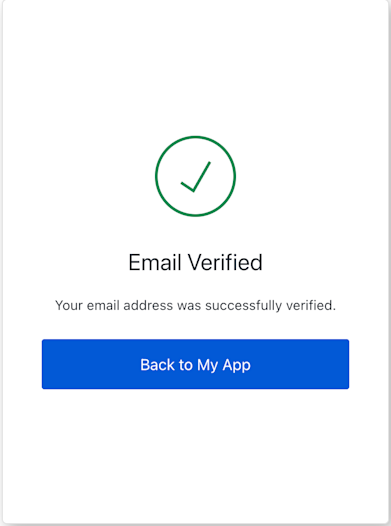
email-verification-result screen functionality. This screen displays the result of an email verification attempt.
Constructors
Create an instance of EmailVerificationResult screen managerExample
Properties
Provides branding-related configurations, such as branding theme and settings.
Provides client-related configurations, such as
id, name, and logoUrl, for the email-verification-result screen.Provides information about the user’s organization, such as organization
id and name.Contains data about the current prompt in the authentication flow.
Contains details specific to the
email-verification-result screen, including its configuration and context.Contains data related to the tenant, such as
id and associated metadata.Provides transaction-specific data for the
email-verification-result screen, such as active identifiers and flow states.Handles untrusted data passed to the SDK, such as user input during the email verification flow.
Details of the active user, including
username, email, and roles.